

Banpo Neolithic Village reveals life in stone age China
From:China Daily NetWriter:Date:2015-09-06
Uncovered in the early 1950s when construction started on a new power plant, Banpo Neolithic village in Xi'an, Northwest China's Shaanxi province, is an archaeological jewel overlooked and overshadowed by the area's more famous regional attraction, the Terracotta Warriors.
Today, what's left of an ancient village that dates to the late Stone Age and its artifacts are preserved at the Xian Banpo Museum. While relics and remains characterize Banpo today, 6,000 years ago it was an active community of about 6 hectares, surrounded by a ditch, or moat, that was 5-6 meters wide.
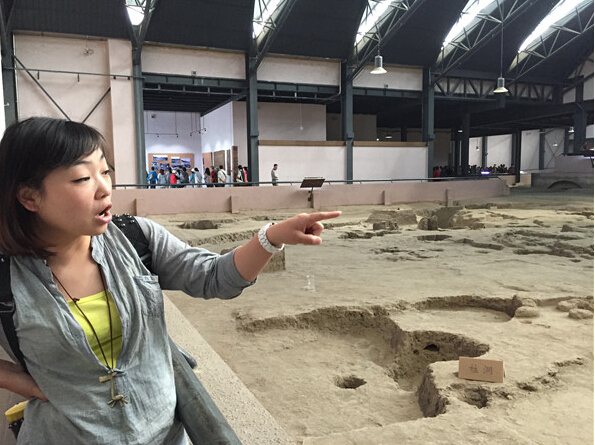
At the Banpo Neolithic village site, a guide notes that foundations for houses were dug a few feet into the ground.
Archaeologists at the site uncovered evidence of circular houses made of wood and clay. There were no written records, but excavations linked Banpo to the Yangshao, who lived along the Yellow River in that era. The discovery also proved the existence of settled communities in prehistoric China.
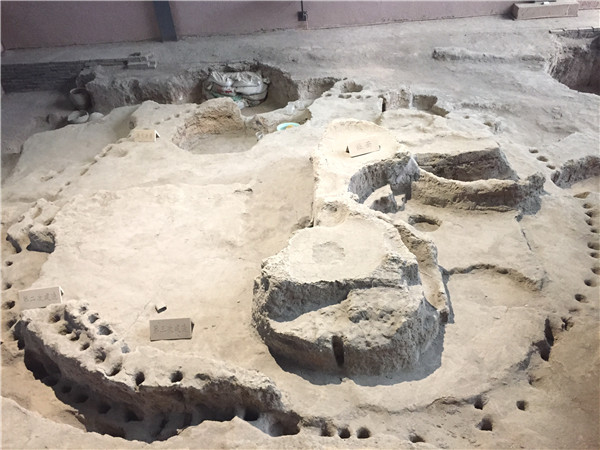
At the Banpo Neolithic village site, a guide notes that foundations for houses were dug a few feet into the ground.
More than 200 storage pits, six pottery kilns, 250 tombs and more than 10,000 stone tools and everyday items were unearthed at the site. The sites of 45 houses were found.
The museum is small and modern but one of the best of its size in China. The main excavation area is protected in a huge, well-lit building that resembles an airplane hangar. Visitors can walk around the display to see the village remains from every angle. Artifacts are exhibited in historical context and information is presented in good English for those who don't read Chinese.
A short, well made film in Chinese and English about the village and the people who lived there is regularly shown at the museum. It provides a good introduction and overview of Banpo, how it came to be and why it is important now to understand the past.
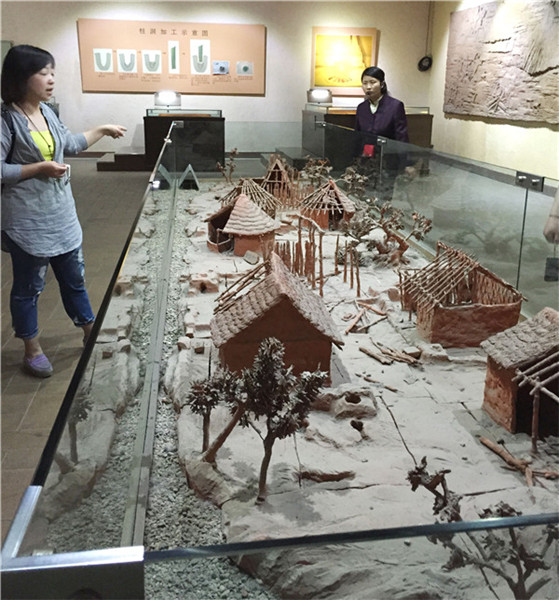
A diorama illustrates what a section of Banpo looked like when it was occupied 6,000 years ago.
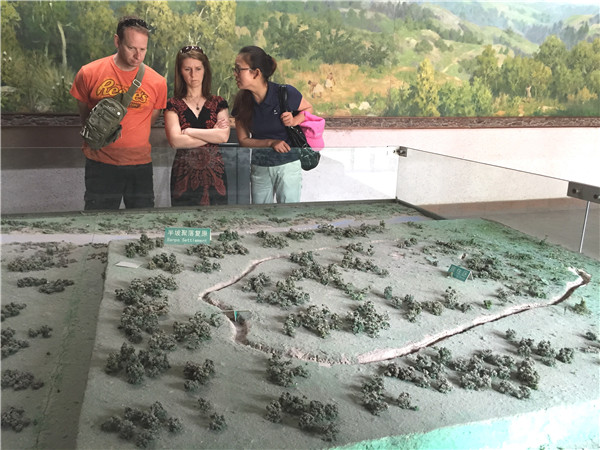
Tourists view a model of the wide, deep ditch that surrounded Banpo. The ditch was a defensive measure designed to protect the Neolithic village.
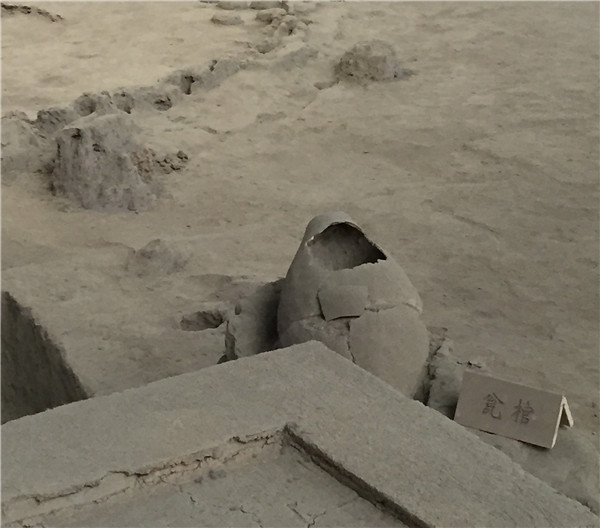
Burial urns for infants and young children, like this one, were placed at an outside corner of the family home in ancient Banpo. Archaeologists discovered 73 urn burials at the site.
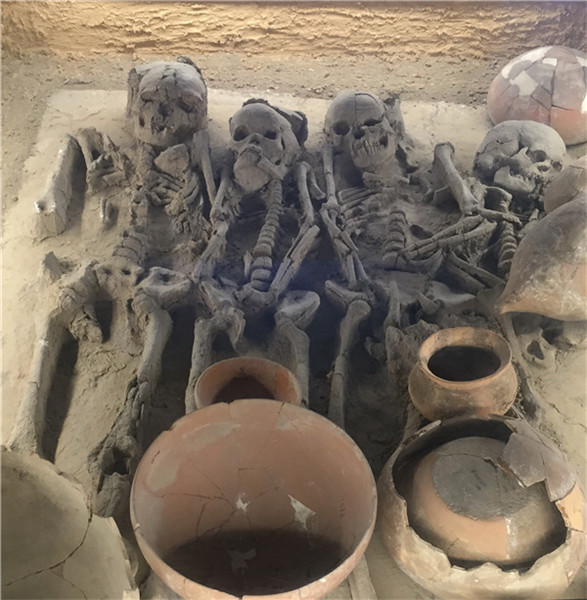
Banpo's cemetery contained 174 adult burials; several skeletons like these four are on display in the museum.
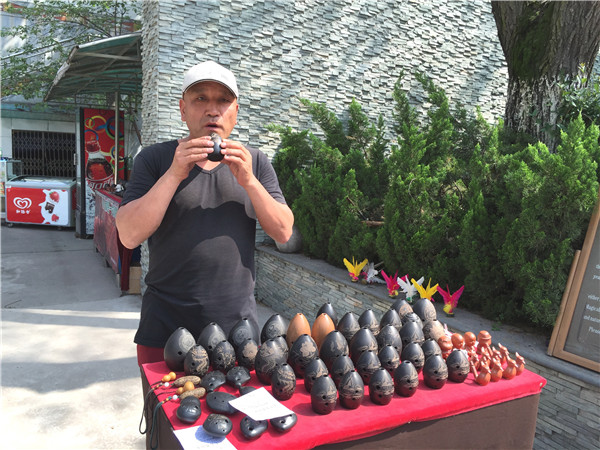
A vendor outside the museum sells reproductions of a musical instrument that makes a flute-like sound.