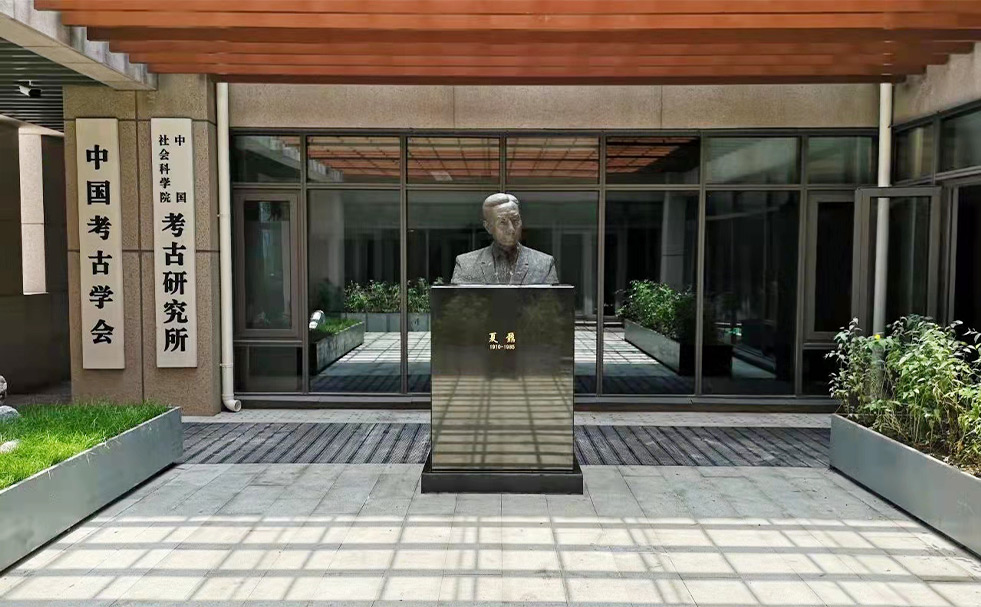
The Institute of Archaeology, Chinese Academy of Social Sciences (CASS) (the Institute of Archaeology, Chinese Academy of History), was established on August 1st, 1950, as one of the earliest institutes founded under the Chinese Academy of Sciences. In May 1977, it was placed under the jurisdiction of the CASS. Today, the Institute of Archaeology stands as a top-tier national archaeological research institution with the most comprehensive academic disciplines, the broadest research scope, and the richest scholarly achievements, enjoying preeminence domestically and renown internationally.


——————— VIEW MORE +

  • A glimpse into AI-enabled archaeology 2026-01-23
    Archaeology and artificial intelligence (AI) may seem like two different worlds, but they are coming together in a fascinating way.Archaeologists dig through the dust to uncover the past, while AI has the computational power to process vast amounts of data. This powerful combination is revolutionizing archaeological research, as AI technologies, with deep learning at its core, are increasingly used to explore and understand human history.
      Photo shows the computer-assisted reconstruction of two pieces of oracle bone inscriptions from the collection...
  • Ancient DNA investigation of the domestication history of pigs in Northeast China 2025-12-28
    Archaeological evidence demonstrates that China was one of many early centers of pig domestication. Yet, it remains uncertain whether there was a single center or multiple centers within China. A recent ancient DNA study of archaeological pig remains hypothesized that in addition to the North China Plain, Northeast China may have also been a pig domestication center. In this study, we conducted ancient DNA analysis on 35 pig remains from Wanfabozi (6–2.2 kBP) and Dashanqian (4–2.2 kBP) in order to better understand the regional history of ancient pi...
  • Ancient DNA reveals the maternal genetic history of East Asian domestic pigs 2025-12-28
    Zoo-archaeological and genetic evidence suggest that pigs were domesticated independently in Central China and Eastern Anatolia along with the development of agricultural communities and civilizations. However, the genetic history of domestic pigs, especially in China, has not been fully explored. In this study, we generate 42 complete mitochondrial DNA sequences from ∼7500- to 2750-year-old individuals from the Yellow River basin. Our results show that the maternal genetic continuity of East Asian domestic pigs dates back to at least the Early to Mi...
JOURNALS
Copyright The Institute of Archaeology, Chinese Academy of Social Sciences (IA CASS), P.R.China. All Rights Reserved
Address: No. 1, National Stadium North Road, Chaoyang District, Beijing (Post Code: 100101)   E-mail:kaogu@cass.org.cn   FAX: 86-10-87421997