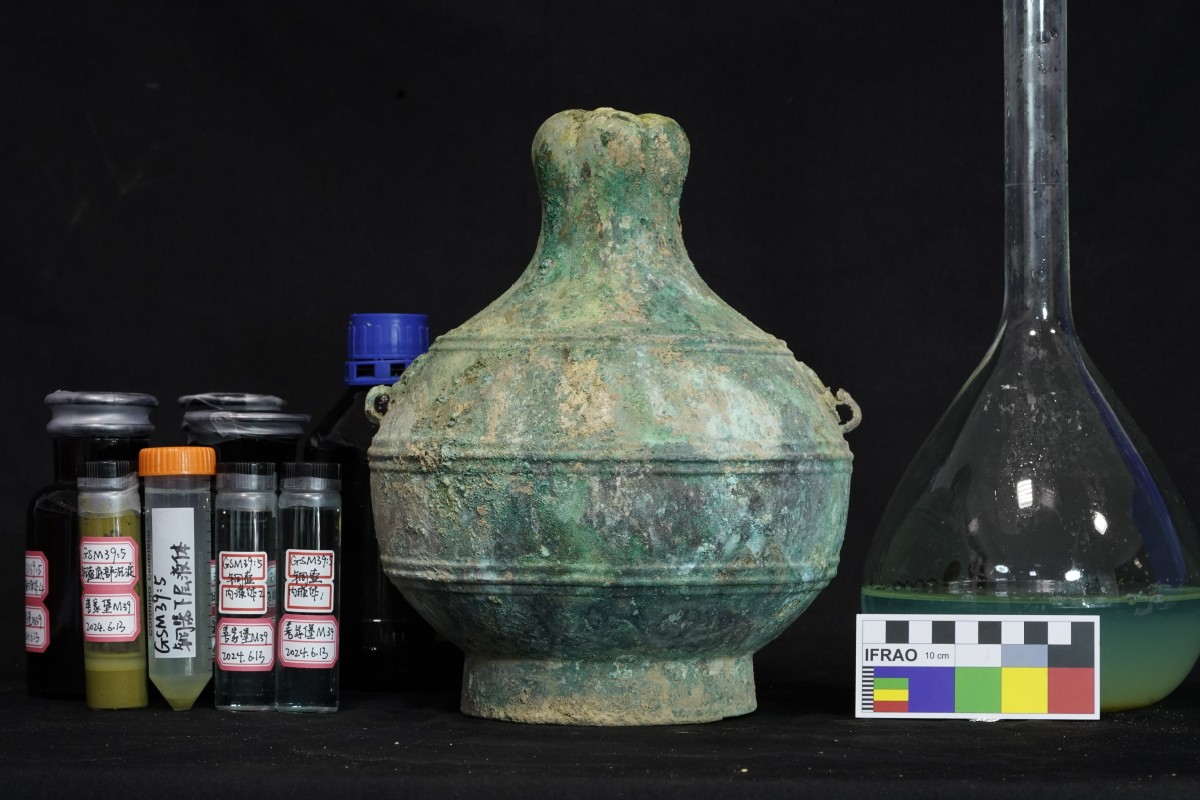
The bronze bottle and the liquid samples extracted from the Shanjiabao cemetery in the southwest of Yuanzhou district, Guyuan, Ningxia. [Photo provided to chinadaily.com.cn]
Chinese archaeologists have discovered and identified cereal-based alcoholic residue from the Warring States Period (475-221 BC) at a cemetery in the Ningxia Hui autonomous region that shed new light on cereal processing, utilization, and brewing techniques among the Qin people of the time.
Experts said the findings contribute to our understanding of the evolution of Chinese brewing technology. The discovery also represents the best-preserved liquid alcoholic beverage sample from the period ever reported in China.
According to the study, which was published in the June edition of the Journal of Archaeological Science: Reports, the residue was found at the Shanjiabao cemetery in the southwest of Yuanzhou district, Guyuan.
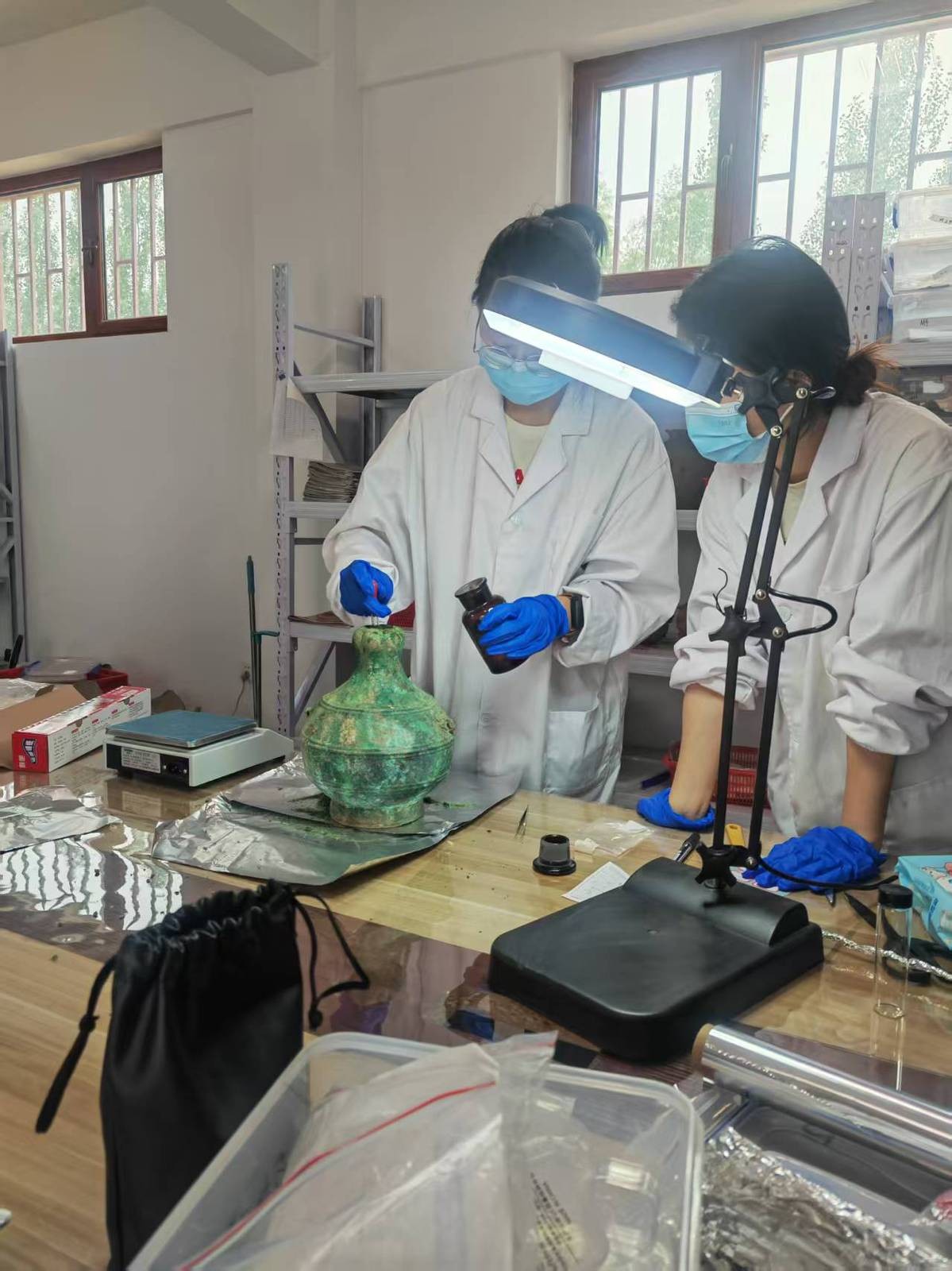
A total of 183 tombs were excavated, 179 of which belonged to the Qin people. Tomb M39, at the northernmost edge of the cemetery, yielded a bronze bottle with a garlic-shaped mouth, the study said. The bottle was sealed with textile on the inside and organic-tempered daub on the outside. After researchers removed the seal with a sterile scalpel and forceps, they extracted approximately 3,740 milliliters of clear, light blue-green and odorless liquid, along with a small amount of sediment.
An analysis of the samples revealed detailed flavor profiles, diagnostic organic acids, starches, phytoliths, and yeast, providing multiple lines of evidence to determine the ingredients and brewing processes of the ancient alcoholic beverage, according to the study.
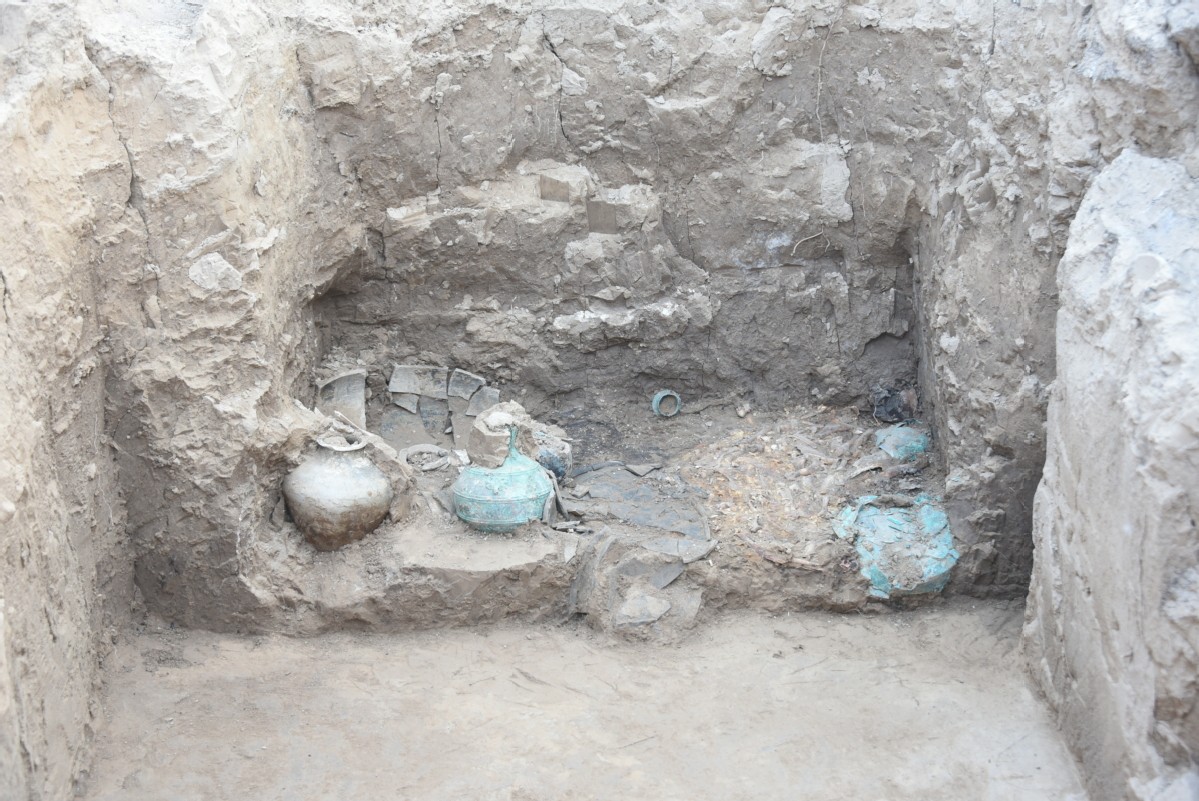
The location where the bronze bottle is unearthed. [Photo provided to chinadaily.com.cn]
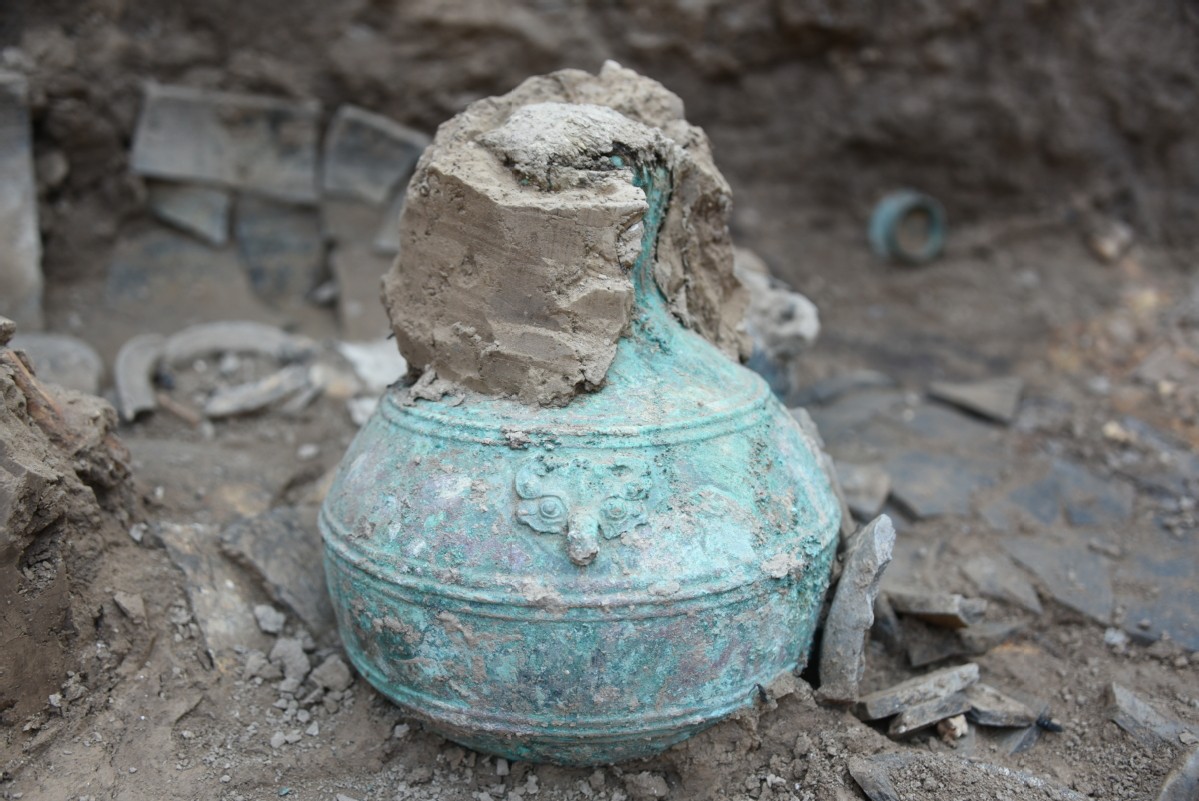
A full view of the bronze bottle when it is unearthed. [Photo provided to chinadaily.com.cn]
Staff members from the Ningxia Institute of Cultural Relics and Archaeology extract samples from the bronze bottle. [Photo provided to chinadaily.com.cn]