Biographical Profile
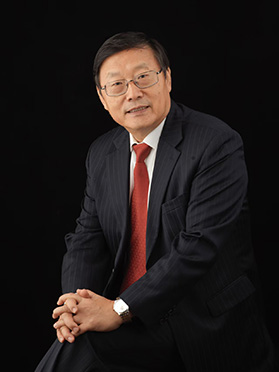
Wang Wei, Male, is of Han ethnicity with ancestral home in Rongcheng City, Shandong Province. He was born in Changchun City in 1954. He is a member of the Communist Party of China, holding doctoral degrees from both China and Japan, and a doctoral supervisor. He is a Member of the Academic Divisions of the Chinese Academy of Social Sciences and a First-Class Research Fellow.
He graduated with a degree in Archaeology from the Department of History, Jilin University in early 1982 and started working at the Institute of Archaeology, Chinese Academy of Social Sciences. He has previously served as Director of the Xia-Shang-Zhou Archaeology Division, Deputy Director and Director of the Institute of Archaeology, Editor-in-Chief of Archaeology, and Director of the Academic Division of History at the Graduate School of the Chinese Academy of Social Sciences. Currently, he holds the position of Director of the Academic Division of History of the Chinese Academy of Social Sciences and Deputy Director of the Advisory Committee of the Chinese Academy of History. He is a Corresponding Member of the German Archaeological Institute and a Lifetime Foreign Member of the Archaeological Institute of America. He has been honored as a Young and Middle-Aged Expert with Outstanding Contributions of the Chinese Academy of Social Sciences, a recipient of the Government Special Allowance of the State Council, an Outstanding Communist Party Member of the Chinese Academy of Social Sciences, and Annual Scholar of the Year of 2022 by China Newsweek.
His past academic and social roles include Former Chairman of the Archaeological Society of China; Deputy to the 12th and 13th National People's Congress; Member of the Education, Science, Culture and Public Health Committee of the 13th National People's Congress; Member of the History Discipline Review Group of the 5th and 6th Academic Degrees Committee of the State Council; Chairman of the Archaeology Discipline Review Group of the 7th and 8th Academic Degrees Committee of the State Council; Leader of the Expert Group on Archaeology of the National Social Science Fund of China.
He served as Chief Expert and Leader of the Executive Expert Group for the major scientific research project "Project on the Origins of Chinese Civilization" (during the 10th to 13th Five-Year Plans of the People's Republic of China); Chief Expert for the Major Commissioned Project of the National Social Science Fund of China "Comprehensive Research on the Origin of the Mongol" (October 2012 - December 2021); Chief Expert for the Major Commissioned Project of the National Social Science Fund of China "Theoretical Construction and Practice on the Origin of Chinese Civilization". He is the Editor-in-Chief of the 3rd Edition of Encyclopedia of China: Archaeology Volume, the Editor-in-Chief of the 3rd Edition of the Archaeology Volume of Cihai (Sea of Words), the Editor-in-Chief of the Dictionary of Chinese Archaeology, and the Chief Expert and Editor-in-Chief of the National Social Science Fund of China Major Project A Century of Chinese Archaeology (12 volumes, totaling over 9 million Chinese characters). This set of books was selected as a Major Research Achievement of the Chinese Academy of Social Sciences in 2021 and one of the Top 100 Good Books of 2021.
He currently serves as the Chief Expert for the Major Project "Research on the Identification System of Chinese Civilization" supported by the Xi Jinping Thought on Culture Research Center under the Publicity Department of the Communist Party of China Central Committee, and the Chief Expert for the National Social Science Fund of China Major Project "Research on the Distinctive Characteristics and Outstanding Contributions of Chinese Civilization from the Perspective of World Civilizations".
Major Work
His main research areas cover archaeology from China's prehistoric period to the Xia, Shang and Zhou dynasties; archaeological research on the origin of Chinese civilization; archaeological research on the formation, development and cultural exchanges of ancient states in East Asia; research on the formation and development of a unified multi-ethnic state; and comparative studies of ancient civilizations worldwide. He has published and edited more than ten academic works and over 150 research papers to date. His works Listening to the Chief Expert Talk About the Project on the Origins of Chinese Civilization was included in the Bestsellers List of 2023, Tracing the Origins of Chinese Civilization won the title of China's Good Book of 2023, and The Origin Story: Following Archaeologists to Trace the Roots of Civilization was rated as a Quarterly Good Book of 2024.
He has presided over large-scale archaeological excavations of the palace area of the Shang Dynasty city site in Yanshi, Henan, the bronze - casting workshops and residential areas at Xiaomintun in the Yin Ruins, Anyang, and the royal ancestral temple at the Zhouyuan capital site in Shaanxi. He has won the National Field Archaeology Award three times.
From 2012 to 2014, he served as the Chinese Chief Leader of the joint Sino-Uzbek archaeological excavation of the Mingtepa Ancient City. The archaeological team he led was cordially received by General Secretary Xi Jinping.
From 2015 to 2017, he acted as the Chinese Chief Leader of the joint Sino-Honduran archaeological excavation of the Copán Site, a core site of the Maya civilization.
From 2018 to 2024, he served as the Chinese Chief Leader of the joint Sino-Egyptian archaeological excavation of the Montu Temple at Thebes, the capital of the New Kingdom of Egypt.
Major Achievements
•Wang Wei. "A Preliminary Discussion on the Jade Cong of the Liangzhu Culture". Archaeology, No. 11, 1986.
•Wang Wei. "A Probe into the Origin of Jade Articles of the Shang Culture". Archaeology, No. 9, 1989.
•Wang Wei. "A Study on the Misongri-type Pottery", in Kogaaku Ronko (Archaeological Review), Vol. 14. Fuchihara Archaeological Institute, Japan, 1990.
•Wang Wei. "EAST ASIA OF THE 4TH CENTURY IN THE LIGHTOF ARCHAEOLOGICAL DISCOVERIES". Acta Archaeologica Sinica, No. 3, 1996.
•Wang Wei. "A Comparative Study of Ancient Mound Tombs in China and Japan" [in Japanese], in East Asia and Japanese Archaeology I (Tomb Systems). Douseisha, 2001.
•Wang Wei. "Sino-Japanese Exchanges During the Period of the Five Kings of Wa" [in Japanese]. Kogaaku Kikan (Archaeological Quarterly), No. 33.
•Wang Wei. "A Discussion on the Causes of Large-Scale Cultural Mutations Around 2000 BCE". Archaeology, No. 1, 2004.
•Wang Wei. "Settlement Pattern Research and the Exploration of the Origins of Chinese Civilization". Cultural Relics, No. 5, 2006.
•Wang Wei. "An Outline of the Formation of Ancient States in China", in Proceedings of the Symposium on the Civilization Process in the Central Plains Region. Science Press, 2006.
•Wang Wei. "Several Issues Concerning the Study of the Origin of Chinese Civilization", in Proceedings of the China-Sweden Archaeology Forum. Science Press, 2006.
•Wang Wei. "Cultural Exchanges Between East and West Before the Han Dynasty" [in Japanese], in Festschrift Commemorating the Retirement of Professor Masahiro Mogi. Douseisha, Japan, 2007.
•Wang Wei. "The Understanding and Application of Historical Materialism Principles in Chinese Archaeology". Bulletin of the Chinese Academy of Social Sciences, Theoretical Monthly Edition, February 28, 2008.
•Wang Wei. "Viewing the Inariyama Kofun and Saitama Kofun Group in Japan from a Chinese Perspective". Archaeology, No. 12, 2009.
•Wang Wei & Zhao Hui. "Major Achievements of the Project on the Origins of Chinese Civilization". Guangming Daily, p. 12, February 23, 2010.