Biographical Profile
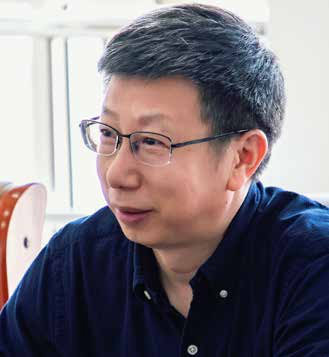
Dong Xinlin, male, was born in 1966 in Suizhong County, Liaoning Province. He is a member of the Communist Party of China and holds a doctoral degree. He completed his education at Jilin University (bachelor's), Peking University (master's), and Waseda University in Japan (Ph.D.). In July 1993, he began working at the Institute of Archaeology at the Chinese Academy of Social Sciences. He is a "Great Wall Scholar" of the Chinese Academy of Social Sciences and an expert receiving the government special allowance issued by the State Council.
Currently, he serves as Deputy Director of the Institute of Archaeology and a Second-Level Research Fellow, Director (Chief Expert) of the Key Laboratory of Archaeological Science and Cultural Heritage Conservation, as well as a Professor and Doctoral Supervisor at the Graduate School of the University of Chinese Academy of Social Sciences. He is also the Academic Leader of the Advantageous Discipline of Han-Tang Archaeology under the Chinese Academy of Social Sciences' "Summit Strategy" and the Team Leader of the Baikoucheng Archaeological Team in Jiangxi. Concurrently, he holds the position of Deputy Editor-in-Chief of Acta Archaeologica Sinica; serves as a Council Member of the Archaeological Society of China, Executive Deputy Director of the Song-Liao-Jin-Yuan-Ming-Qing Archaeology Professional Committee, and Executive Deputy Director of the Imperial Mausoleum Archaeology Professional Committee. He is the Chief Editor for the Sui-Tang-Song-Yuan-Ming-Qing Archaeology section of the Encyclopedia of China: Archaeology (Third Edition).
He previously served as Team Leader of the Inner Mongolia Archaeological Team (1996–2003) and Team Leader of the Inner Mongolia Second Archaeological Team (2003–2024); Deputy Director of the Han-Tang Archaeology Division (2008–2017); and Director of the Han-Tang Archaeology Division (November 2017 – April 2023).
Major Work
He has always been rooted in the frontline of archaeology, focusing on the excavation and research of China's historical periods and paying attention to archaeological comparative studies of Sino-foreign cultural exchanges. Since 1993, he has witnessed and participated in the vigorous development of Chinese archaeology.
Shortly after joining the institute in July 1993, he took part in the archaeological excavation of the Xinglongwa site in Aohan, Inner Mongolia, led by Research Fellow Yang Hu. From 1994 to 1996, entrusted by Team Leader Liu Jinxiang of the Inner Mongolia Archaeological Team, he organized and compiled the archaeological excavation materials of the Zhaobaogou site in Aohan Banner, Inner Mongolia, completing the archaeological monograph Aohan Zhaobaogou: A Neolithic Settlement. Beginning in 1998, he led a team to conduct archaeological surveys, excavations, and research on Liao Dynasty tombs in eastern Inner Mongolia. He also directed archaeological excavation projects for the Three Gorges Project (2001–2002) and the South-to-North Water Diversion Project (2006), and completed and published archaeological monographs such as Xiheishan in Xushui: Excavation Report of a Jin-Yuan Period Cemetery.
Since 2003, he has led several landmark archaeological projects. From 2003 to 2010, as team leader, he directed the archaeological survey and excavation of the Liao Zuling Mausoleum site in Bairin Left Banner, Inner Mongolia. This marked the first time Chinese scholars conducted large-scale archaeological excavations of an imperial mausoleum from the Liao Dynasty. In 2008, the architectural foundations of the Jia Group at the Liao Zuling site were honored as one of the "Archaeology Forum of CASS: China's New Archaeological Discoveries for 2008". In 2010, the excavation project of the Heilongmen site at Liao Zuling received the highest national award for field archaeology—the First Prize in the "2009–2010 Field Archaeology Excavation Award" by the National Cultural Heritage Administration. This was also the first first-prize project in the history of the Institute of Archaeology.
From 2011 to 2023, as team leader, he directed the excavation of the Liao Shangjing site in Bairin Left Banner, Inner Mongolia, achieving a series of important new archaeological discoveries and results that attracted widespread attention from scholars both domestically and internationally. Among these, the Xishanpo Buddhist temple site of the Imperial City at Liao Shangjing was selected as one of the "China’s Top Ten Archaeological Discoveries of 2012" by the National Cultural Heritage Administration. In 2021, the Liao Shangjing site was included in China's "100 Major Archaeological Discoveries of the Past Century." In 2022, the No. 1 architectural foundations in the southern part of the Imperial City at Liao Shangjing were listed among the major project achievements released under the "Archaeology China" initiative by the National Cultural Heritage Administration. In 2023, the architectural site in the southern part of the Imperial City at Liao Shangjing was selected for the "Archaeology Forum of CASS: China's New Archaeological Discoveries for 2023".
In 2024, driven by his passion for field archaeology, he made concerted efforts to establish the Jiangxi Baikoucheng Archaeological Team and serves as its first leader, embarking on a brand-new academic journey and opening a new chapter in his personal research. He is leading the team in a five-year archaeological excavation of the Baikoucheng site in Taihe County, Jiangxi Province, dating to the Han-Six Dynasties period. This marks a new phase in the excavation and research of local urban archaeology in Jiangxi.
Furthermore, as the chief expert of the major project "Collation and Comprehensive Research of Archaeological Materials from the Imperial City Site of Liao Shangjing" under the National Social Science Fund of China, he actively promotes the organization and compilation of archaeological excavation reports.
From 2017 to 2024, commissioned by the National Cultural Heritage Administration and representing the Institute of Archaeology, he served as the head teacher, organizing the "Urban Archaeology (Open Site) Advanced Training Course" for eight consecutive years at the Liao Shangjing excavation site. The course has trained over a hundred key personnel for archaeological institutions across various provinces and cities, earning widespread acclaim within the archaeological community.
Major Achievements
By the end of 2024, he had published 7 archaeological monographs and authored over 100 archaeological brief reports and academic papers. Major works include:
•Dong Xinlin. Archaeological Research on Ancient Chinese Mausoleums. Fujian People's Publishing House, 2005.
•Dong Xinlin & Zhang Peng (eds.). Complete Classified Collection of Chinese Fine Arts · Complete Collection of Chinese Tomb Murals Vol. 3: Song, Liao, Jin & Yuan Dynasties. Hebei Education Press, 2011.
•Institute of Archaeology, Chinese Academy of Social Sciences et al. (eds.). Zuling mausoleum of the Liao dynasty : report on the archaeological surveys and excavations from 2003-2010 (Chief Editor: Dong Xinlin; Authors: Dong Xinlin & Wang Ying). Cultural Relics Press, 2022. It was awarded Major Scientific Research Achievement of the Innovation Project of the Chinese Academy of Social Sciences 2022 and Top 10 Cultural Heritage Books of 2022.
•Institute of Archaeology, Chinese Academy of Social Sciences (ed.). Chinese Archaeology, Song dynasty to Ming dynasty (Chief Editors: Meng Fanren & Dong Xinlin). China Social Sciences Press, 2023. Dong Xinlin is the sole author of Chapters 16 to 20 (from Song Dynasty tombs to Ming Dynasty tombs), totaling over 530,000 Chinese characters. The book was awarded Top 10 Cultural Heritage Books of 2023 and Major Achievement of "Building an Independent Knowledge System of Chinese Philosophy and Social Sciences" of the Chinese Academy of Social Sciences 2024.
•Dong Xinlin. "A Brief Discussion on the Tomb Forms and Chronology of the Liao Dynasty". Archaeology, No. 8, 2004.
•Dong Xinlin. "Preliminary Study of the Yuan Dynasty Tombs in Northern China". Archaeology, No. 9, 2015.
•Dong Xinlin. "The Shangjing Norm of the Liao Dynasty and the Dongjing Mode of the Northern Song Dynasty". Archaeology, No. 5, 2019.
•Dong Xinlin. "PRELIMINARY STUDY OF THE ZULING MAUSOLEUM OF THE LIAO DYNASTY". Acta Archaeologica Sinica, No. 3, 2020.
•Dong Xinlin. "Preliminary Study of the Northern Wei Yonggu Mausoleum at Fangshan". Archaeology, No. 5, 2023.
•Dong Xinlin & Wang Ying. "Concepts, Methods and Practice of Urban Archaeological Excavation at the Shangjing of the Liao Dynasty". Collected Papers of Archaeology, Vol. 31. Social Sciences Academic Press, 2024.