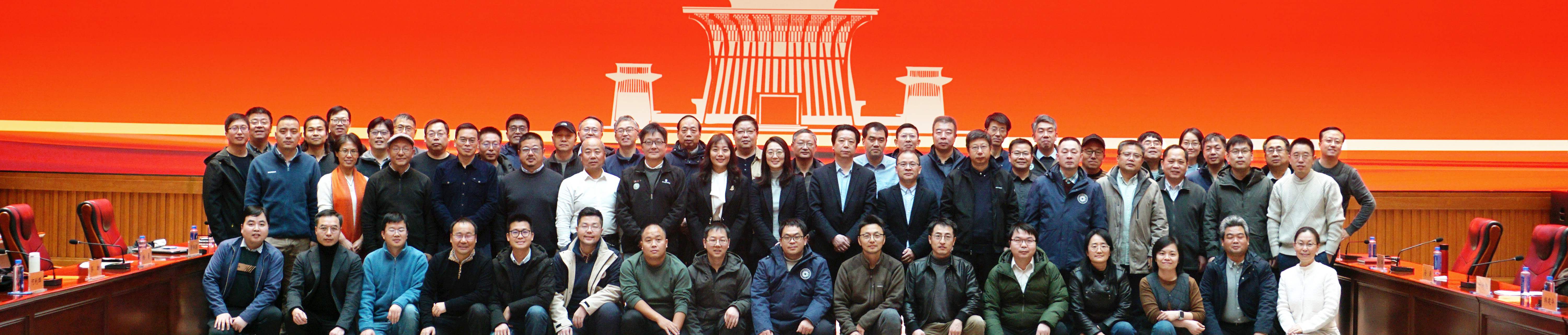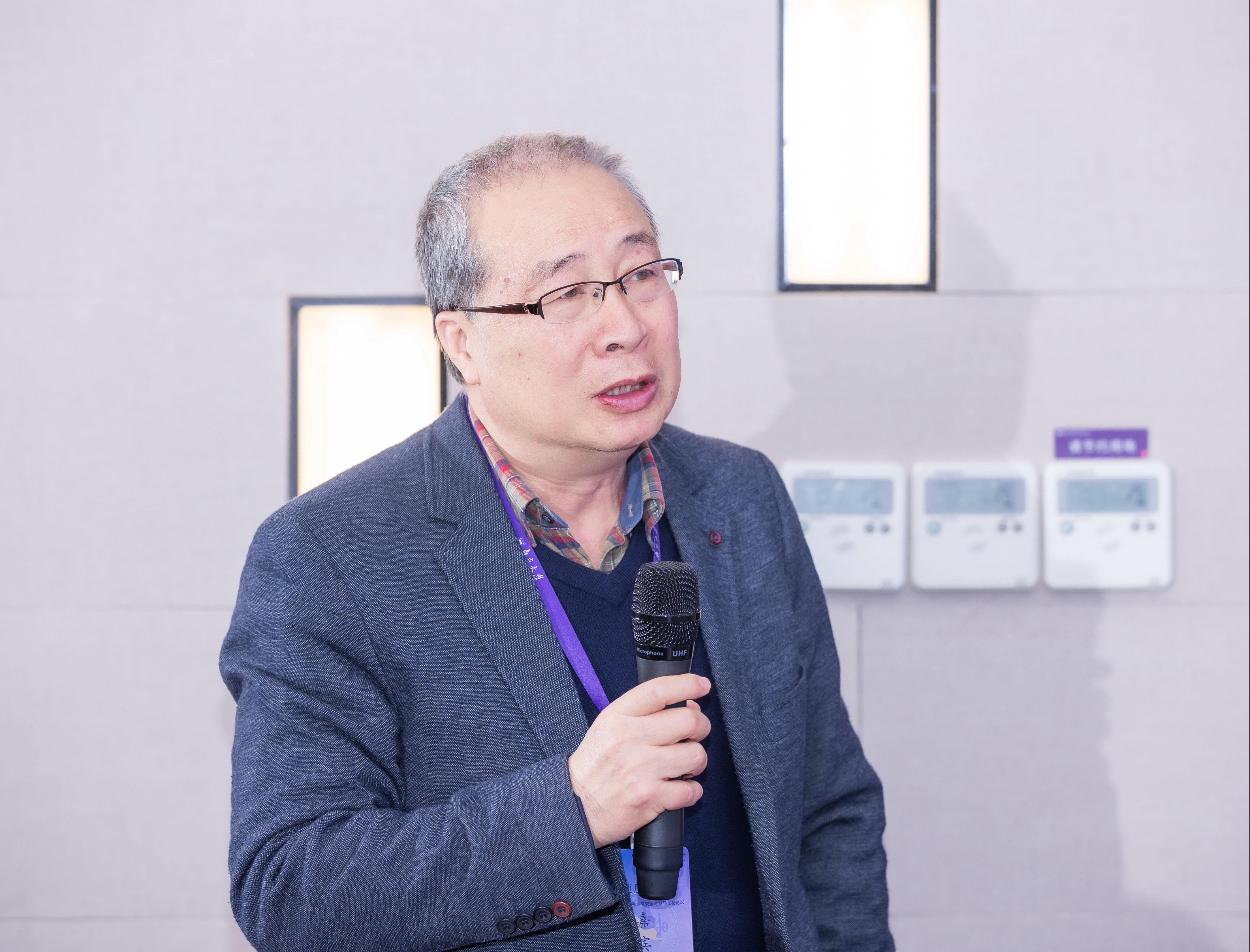
Qian Guoxiang was born in February 1961 in Luoyang, Henan Province, with his ancestral home in Shaoxing, Zhejiang Province. He is a member of the Communist Party of China (CPC). He enrolled in the Department of History with a major in Archaeology at Jilin University in September 1979, obtained a Bachelor’s degree in History in July 1983, and joined the Institute of Archaeology, Chinese Academy of Social Sciences (CASS) in August of the same year.
He retired in 2021 as a Second-Class Research Fellow and is a recipient of the Government Special Allowance issued by the State Council. His previous leadership and academic positions include serving as the Director of the Luoyang Archaeological Station, the Leader of the Luoyang Han-Wei City Archaeological Team, the Director of the Architectural Archaeology Specialized Committee, and the Vice Director of both the Three Kingdoms to Sui-Tang Archaeology Specialized Committee and the Urban Archaeology Specialized Committee of the Archaeological Society of China.
His primary research focuses on Han and Tang dynasty urban and tomb archaeology, architectural archaeology, and Buddhist sculpture studies. From 1983 to 1992, he participated in archaeological excavations including the Western Zhou cemetery at Liulihe in Beijing; the Great City Wall and Jianchun Gate, the outer city and Great Marketplace of the Han-Wei City in Luoyang; the Large Western Han Tomb Complex to the west of the city; and the Jingling Mausoleum of Emperor Xuanwu of the Northern Wei dynasty. From 1993 to 2021, he directed excavations at sites such as the Jinyong City, the West Gate and Pagoda Foundation of Yongning Temple, the Tang Dynasty White Horse Temple, the Changhe Gate of the Imperial Palace City, Palace Gates No. 2 and No. 3 along with adjacent Zhou Dynasty cemeteries, and the Taiji Hall with its surrounding auxiliary palace courtyards within the Han-Wei City in Luoyang.
He completed multiple key projects of the Chinese Academy of Social Sciences, one international collaborative project, and two major projects funded by the National Social Science Fund of China. The Palace City's Changhe Gate project was selected for the “Chinese Academy of Social Sciences Archaeology Forum · 2002 New Archaeological Discoveries in China,” while the Taiji Hall project was selected for both the “Chinese Academy of Social Sciences Archaeology Forum · 2015 New Archaeological Discoveries in China” and the China's Top Ten Archaeological Discoveries of 2015,“ and received the ”First Prize for Field Archaeology (2011-2015)" from the Archaeological Society of China. He authored four archaeological reports and monographs, along with over one hundred excavation briefs and academic papers.
Publication:
•Ritual Architectural Sites in the Southern Suburbs of the Han-Wei Luoyang Ancient City: Archaeological Excavation Report, 1962-1992. Cultural Relics Press, 2010. Received the Nomination Award of the 4th Guo Moruo Chinese History Prize (2012) and the Second Prize of the 9th (2016) Outstanding Scientific Research Achievement Award of the Chinese Academy of Social Sciences.
•"Trial Excavation of the City Walls of the Han-Wei Luoyang Ancient City," Acta Archaeologica Sinica, 1998, No. 3.
•"The Site of the Changhe Gate of the Northern Wei Palace City in the Han-Wei Ancient City, Luoyang, Henan," Archaeology, 2003, No. 7. Received the First Prize of the 2006 Outstanding Scientific Research Achievement Award of the Institute of Archaeology, Chinese Academy of Social Sciences.
•"Periodization and Research on Eaves Tiles Unearthed from the Han-Wei Luoyang City," Archaeology, 1996, No. 10. Received the Second Prize of the 3rd Youth Achievement Award of the Chinese Academy of Social Sciences (1998).
•"A Preliminary Study on the Evolution and Layout Changes of the Han-Wei Luoyang Ancient City," Chinese Archaeology in the 21st Century and World Archaeology – Proceedings of the Conference Commemorating the 50th Anniversary of the Institute of Archaeology, Chinese Academy of Social Sciences and the International Symposium on Chinese Archaeology and World Archaeology in the 21st Century*, China Social Sciences Press, 2002. Received the Second Prize of the 2003 Outstanding Scientific Research Achievement Award of the Institute of Archaeology, Chinese Academy of Social Sciences.
•"Discussing the Layout of the Palace City of Han-Wei Luoyang Based on the Changhe Gate," Archaeology, 2003, No. 7. Received the Excellence Award of the 2006 Outstanding Scientific Research Achievement Award of the Institute of Archaeology, Chinese Academy of Social Sciences.
•"Buddhist Temples and Caves and the Statuary of Yongning Temple in Northern Wei Luoyang," Collected Papers of the 2004 International Academic Symposium on Longmen Grottoes, Henan People's Publishing House, 2006.
•"Evolution of City Planning of Capitals from Han to Tang Dynasty: Origin of Chang'an City of Tang Dynasty Based on Taiji Hall of Caowei State," Cultural Relics of Central China, 2016, No. 4.
•"A Comparative Study of the Wooden Pagodas of the Northern Dynasties," Cultural Relics of Central China, 2017, No. 4.
•"Research on the Reconstruction of the Spatial Layout of the Northern Wei Luoyang Palace City – Part Three of the Reconstruction Research on the Northern Wei Luoyang City Site," Huaxia Archaeology, 2020, No. 5.