Abstract
The Jiaochangpu site is located northwest of Jiaochangpu Village, Chiping District, Liaocheng City, Shandong Province. In 2006, it was designated as a major historical and cultural site protected at the national level by the State Council of China. The site is elliptical in plan and covers an area of approximately 160,000 square meters. The central part of the site is elevated 4 to 5 meters above the surrounding terrain, forming a prominent mound typical of gudui (堌堆) settlements. Several other prehistoric sites are distributed in the surrounding area, including Lepingpu, Dayu, Shangzhuang, and Xiluzhuang.
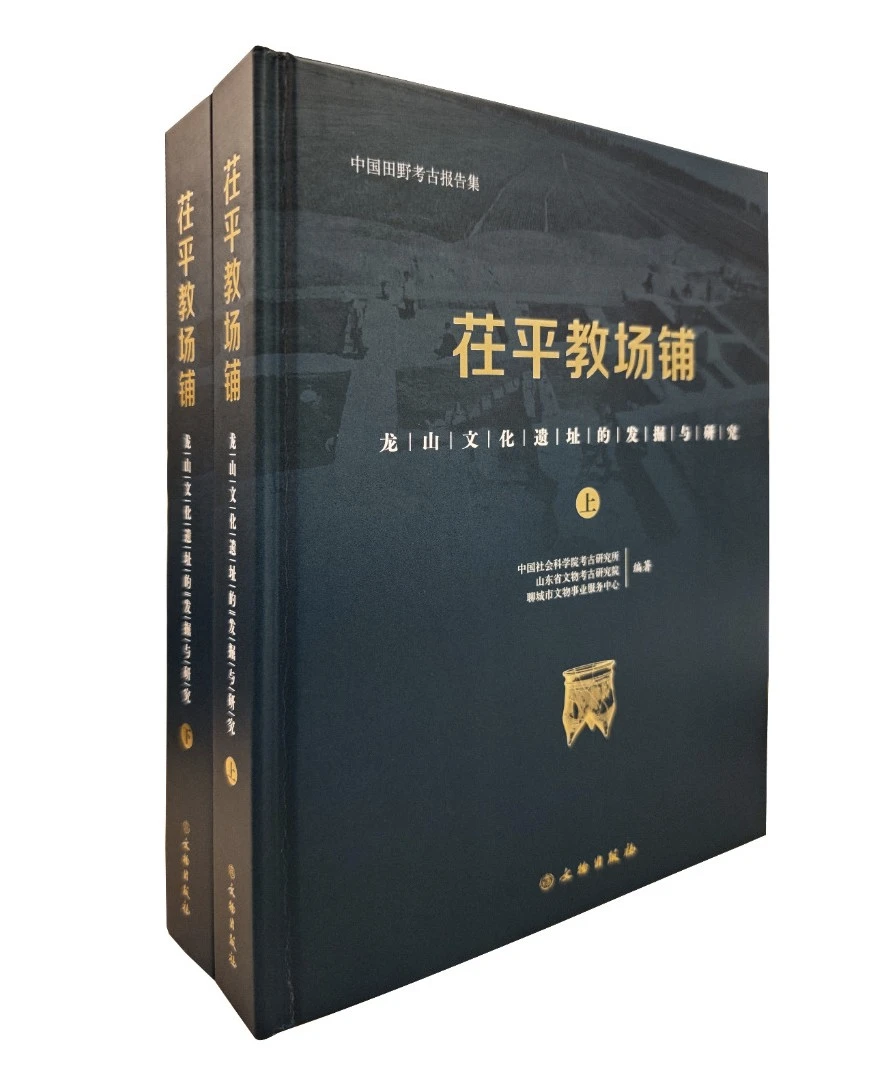
From 1999 to 2004, a collaborative archaeological project was conducted by the Shandong Team of the Institute of Archaeology, Chinese Academy of Social Sciences, the Shandong Institute of Cultural Relics and Archaeology, and the Liaocheng Municipal Bureau of Cultural Relics. The investigation included systematic surveys, coring, and excavations, with a total excavated area of about 2,080 square meters.
The main deposits of the Jiaochangpu site date to the Longshan period, with a smaller number of features attributed to the Zhou and Han periods. The Longshan remains primarily consist of city walls, moats, ash pits, sacrificial pits, foundation sacrificial pits, house foundations, and kilns. A large quantity of artifacts were uncovered, predominantly pottery and shell objects, with additional finds of stone, bone, and horn implements. Features from the Zhou and Han periods primarily include ash pits and burials, which yielded fewer artifacts, including pottery, lithic remains, and bronze objects.
The Jiaochangpu excavation report integrates findings derived from multidisciplinary approaches. For example, analysis of the manufacturing traces on representative pottery specimens revealed that wheel coiling techniques dominated production across all vessel types. Both large coarseware and intricate small vessels were consistently manufactured using wheel coiling, indicating a stable and mature technological system with a high level of craftsmanship. Research on spindle whorls demonstrates that the Jiaochangpu community developed distinctive spinning techniques through long-term practice. The tools created were functionally effective, well-adapted to the raw materials, and suited to the demands of finished textile products. By the middle to late Longshan period, textile production in the Haidai region had reached a new level of technological sophistication, showing signs of specialization. Furthermore, archaeobotanical analysis of carbonized seeds indicates that the staple crops during the Longshan period at Jiaochangpu were foxtail millet (Setaria italica) and broomcorn millet (Panicum miliaceum), supplemented by soybeans, showing a dryland agricultural system. These findings mark substantial progress in the understanding of craft production, agriculture, and the utilization of floral and faunal resources during the Longshan period
The excavation of prehistoric remains at the Jiaochangpu site carries multifaceted academic significance in several key respects:
1. Providing a comprehensive view of the Longshan culture in northwestern Shandong
The site offers valuable insights into the development of Longshan culture in northwestern Shandong, thereby deepening our understanding of the civilization trajectory in the Haidai region. Whereas most previous discoveries in this area have predominantly dated to the middle and especially the late phases of the Longshan period, the Jiaochangpu site has yielded substantial remains from the early and middle phases as well. These findings are critical for reconstructing a more complete developmental sequence of Longshan culture in the region. Moreover, the extensive exposure of architectural foundations, sacrificial pits, kiln remains, and a large assemblage of shell implements alongside highly diversified pottery enriches the cultural content of the Longshan period and provides new evidence of social complexity in the Haidai area.
2. Contributing new data to the study of prehistoric walled settlements in the Haidai region
More than twenty walled sites dating to the Longshan period have been excavated in the Haidai region. Among them, the Jiaochangpu site is distinguished by several notable features, including its relatively small size, elliptical layout, single encircling wall, large rammed-earth platforms, and the presence of sacrificial deposits. These new findings enhance our understanding of the spatial organization of small to medium-sized walled settlements and provide valuable data for examining the functions, hierarchical status, and social organization of walled settlements in northwestern Shandong.
3. Offering key perspectives on interregional cultural interaction in the lower Yellow River region
Interregional interaction during the Neolithic period has long been a major focus of archaeological research. Located at the boundary between the Haidai region and the Central Plains, Jiaochangpu provides substantial archaeological evidence of cross-regional cultural contact. Its material assemblage reflects the dynamics of communication and exchange across these two cultural zones, contributing to the understanding of the processes, extent, intensity, and patterns of interregional interaction in the lower Yellow River region.